Plant-Based Marketing: Writing Content that Connects
Effective plant-based marketing starts with honesty and plain language. Written content should inform, resonate, and earn an audience’s trust.
Brands create content to connect with consumers interested in a plant-based lifestyle. This plant-based marketing strategy often requires debunking outdated myths. Many brands use scientific data to counter false claims and to inform consumers of the benefits of plant-based living.
Yet, messages risk being unheard if they aren’t communicated in a way that everyday consumers can understand and relate to. To connect deeply and earn consumer loyalty, it’s essential to write with your audience in mind.
Simplify Science in Plant-Based Content
Scientific data continues to show the health and sustainability benefits of plant-based living. So, more consumers are looking for plant-based products.
As more plant-based products hit the market, critics often speak out in opposition—particularly critics facing a potential revenue loss. To debunk misinformation, plant-based brands may educate consumers with peer-reviewed scientific data.
But scientific data can be complex. Sometimes, even scientists can find it complicated to comprehend.
Tips for simplifying science in your content:
- Break technical concepts into bite-sized explanations
- Avoid jargon (or define it in plain terms)
- Use analogies when appropriate to clarify ideas
It’s important to explain the scientific data for plant-based diets in simple, clear terms.
Avoid Vague Terms in Marketing
While simple language can benefit a brand’s audience, information should not be too vague. Avoid sentences like:
X Plant-based foods are great for clean eating and provide health benefits.
“Clean eating” is a broad term that lacks a universally accepted definition. When using vague terms, follow up with data that defines the meaning behind those words.
Vague terms to limit or define:
- Healthy
- Nutritious
- Balanced
- Clean
Vague terms can diminish a message. In regard to the above example sentence, a better choice might be:
 A plant-based diet lowers the risk of major chronic diseases, including heart disease, type 2 diabetes, and cancer, based on a 2023 study.
Be Transparent and Authentic
Being straightforward with your audience can result in customer loyalty. Consumers are more likely to buy products from brands that are authentic and honest.
Example of a credible message:
Many plant-based meats are lower in saturated fats and calories and contain zero cholesterol.
However, some plant-based ‘junk foods’ provide little to no nutrition. These foods should not be marketed with implied health benefits. People choose plant-based diets for many reasons.
Their motivations include:
- Health
- Sustainability
- Weight loss
- Food intolerances
- Ethics
Therefore, plant-based marketing should be straightforward and genuine. Transparency is especially important when correcting misinformation from other industries.
Write for Readability and Accessibility
Scientific data should be summarized into text that connects with everyone. It’s essential to simplify complex words or data. Many readers pass over text with complex terminology. Simpler phrasing can improve readability and enhance clarity.
Write content for a broad audience. Ensure it is easy to read on digital devices. Approximately 60% of web traffic comes from mobile phones. Short paragraphs and subheadings make reading easier, especially on small screens.
Most readers skim—79% don’t read word-for-word. Clear, easy-to-understand text helps your audience understand text quickly and accurately. It can also improve engagement.
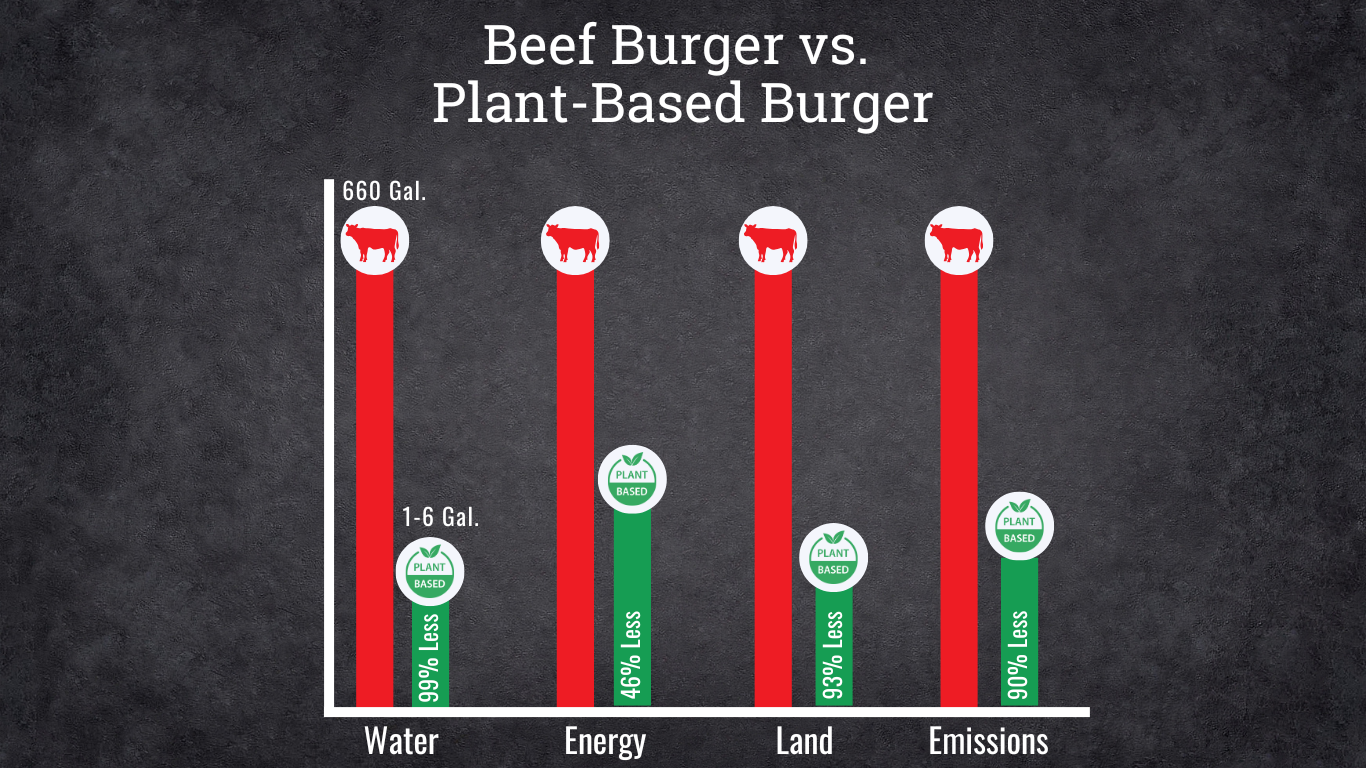
Use bullet points to break up long text. Charts and graphs (like the one below) are easy for your audience to reference. And images are an attractive way to break up text.
In paragraphs, don’t disrupt the flow of the text with parenthetical hyperlinks. Hyperlinks should be embedded when possible. Too many parenthetical hyperlinks can make a sentence hard to read, especially if more than one sentence has them.
Text that flows well is more user-friendly and improves SEO optimization.
Example of improving sentence flow:
|
Instead of this:
A plant-based diet can lower the risk of heart disease by up to 32% (source) and type 2 diabetes by 23% (source).
Do this:
A plant-based diet can lower the risk of heart disease by up to 32% and type 2 diabetes by 23%. This information is from the American Heart Association and the American Diabetes Association.
|
Final Thoughts on Plant-Based Content That Connects
To ensure your written content connects with your audience, focus on clear, credible, and easy-to-read text.
Here’s a quick checklist to guide your next draft:
- Simplify scientific language
- Avoid vague terms
- Be transparent and authentic
- Shorten long sentences
- Break up long text
- Write easy-to-scan, mobile-friendly text
- Embed hyperlinks naturally in a sentence
Create plant-based content that connects with your audience—one sentence at a time.